
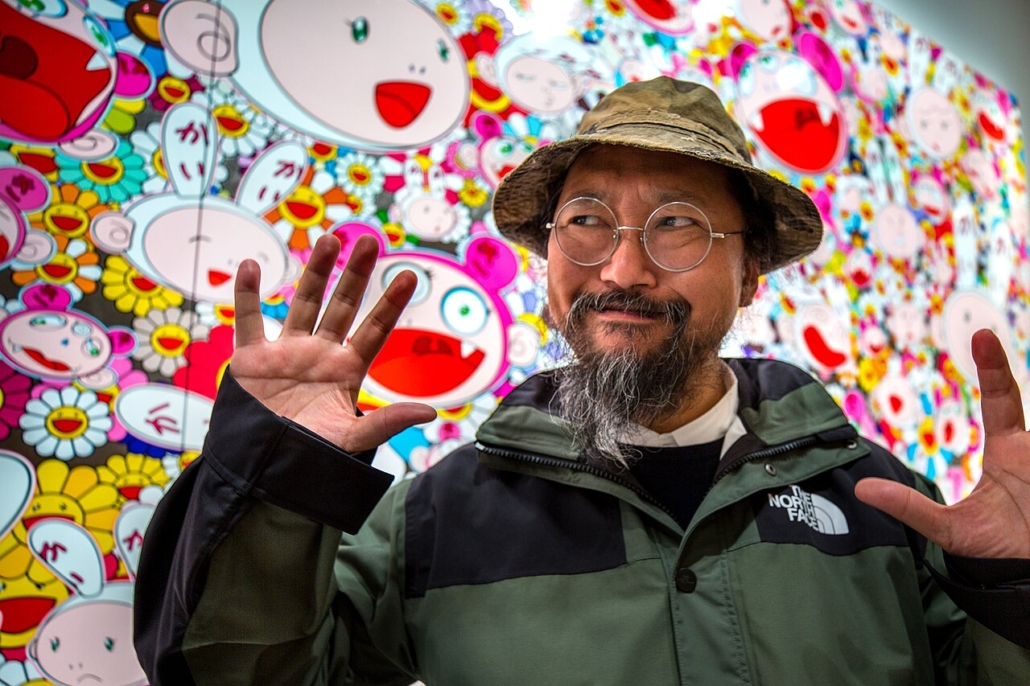
Takashi Murakami Flower and Basquiat Crown: Two Icons Redefining the Contemporary Art Market
The contemporary art world is witnessing a remarkable convergence of street-influenced and pop-culture aesthetics. Among the most discussed symbols today, the Basquiat crown continues to captivate collectors, historians, and new audiences alike.
At the same time, the iconic Takashi Murakami Flower has cemented its place as one of the most recognized motifs in modern visual culture. Together, these two symbols represent a shift in how art is collected, valued, and celebrated globally.
What Makes the Basquiat Crown Unique in Today’s Art Market
Jean-Michel Basquiat’s three-pointed crown is far more than a decorative symbol — it is a cultural statement. The Basquiat crown originated as a recurring motif in Basquiat’s raw, Neo-Expressionist paintings during the 1980s. It represented royalty, Black identity, and a reclamation of power in a world that often marginalized its subjects.
Today, the Basquiat crown appears across fine art prints, luxury collaborations, and limited-edition merchandise. Its bold, hand-drawn quality carries an immediacy that resonates across generations. Auction records for works featuring the Basquiat crown routinely break expectations, reflecting not just nostalgia but genuine market confidence.
What keeps the Basquiat crown relevant is its versatility. It functions equally well as a fine art reference, a streetwear emblem, and a symbol of cultural resistance. Galleries across New York, London, and Tokyo regularly anchor exhibitions around Basquiat’s iconography, ensuring the symbol remains a living part of contemporary discourse.
The Takashi Murakami Flower: Style, Humor, and Artistic Vision
Few images in 21st-century art are as instantly recognizable as the Takashi Murakami Flower. Featuring a smiling face at its center surrounded by rounded petals in vivid, flat colors, the Takashi Murakami Flower draws equally from traditional Japanese artistic conventions and Western pop culture.
Murakami developed his signature “Superflat” theory — a concept that deliberately collapses the hierarchy between high art and commercial imagery. The Takashi Murakami Flower is perhaps the purest expression of this philosophy: it is simultaneously cheerful and subversive, mass-producible yet unmistakably singular.
The market for the Takashi Murakami Flower has expanded dramatically in the past decade. Original prints, sculptures, and NFT editions have all achieved significant sales. The motif’s bold graphic simplicity makes it adaptable across media — from gallery canvases to high-end fashion collaborations with brands like Louis Vuitton. This cross-sector appeal has made the Takashi
Murakami Flower a staple in both institutional collections and private portfolios.
Connecting Takashi Murakami Flower to Basquiat Crown: Shared Conceptual Ground
On the surface, the Takashi Murakami Flower and the Basquiat crown appear to inhabit different worlds — one rooted in Japanese pop sensibility, the other in American street culture. Yet both symbols challenge the same fundamental question: who controls meaning in art?
The Basquiat crown asserts dignity and authorship in a world that tried to deny it. The Takashi Murakami Flower dismantles elitism by making joy and accessibility the highest artistic virtues. Both motifs democratize art — placing powerful imagery into the hands of broader audiences through prints, collaborations, and digital formats.
This shared spirit has made both icons particularly well-suited to the ceramic and sculptural art movement that is currently attracting new collectors. Artists working in contemporary ceramics frequently cite both Murakami’s playfulness and Basquiat’s rawness as formative influences — blending them into three-dimensional works that bridge the gap between functional craft and fine art statement pieces.
Why Collectors and Galleries Are Investing in the Basquiat Crown
The Basquiat crown has evolved into a reliable indicator of cultural cachet. For galleries, featuring works that incorporate the Basquiat crown signals a commitment to historically significant, socially conscious art. For individual collectors, acquiring pieces that reference this motif represents both aesthetic passion and financial prudence.
Online platforms have amplified this trend considerably. Resale markets for prints and objects bearing the Basquiat crown imagery have seen consistent year-over-year growth. The symbol’s association with authenticity and rebellion makes it especially desirable to younger collectors entering the market for the first time.
Similarly, the Takashi Murakami Flower has become a cornerstone of the digital art economy. Murakami’s early embrace of NFTs introduced his signature motif to an entirely new generation of collectors. The crossover between physical and digital editions of the Takashi Murakami Flower has created a layered market where scarcity, format, and provenance all contribute to value.
Takashi Murakami Flower and Basquiat Crown as Pillars of Contemporary Art
The enduring relevance of the Takashi Murakami Flower and the Basquiat crown speaks to a deeper truth about what makes art last. Both symbols are rooted in identity, culture, and a refusal to accept arbitrary limits on what art can be or who it belongs to.
As galleries, collectors, and digital platforms continue to invest in these icons, the cultural footprint of the Takashi Murakami Flower and the Basquiat crown will only deepen. Whether you are a seasoned collector or a first-time buyer, understanding these two motifs is essential to navigating — and appreciating — the contemporary art landscape today.
Photo Credit: The Museum of Fine Arts in Boston features works by Japanese artist and renowned contemporary artist, Takashi Murakami by Citlalivargasss.
